Connecting Research and Design
Connecting Research and Design is a practical model that supports collaboration between researchers and designers.


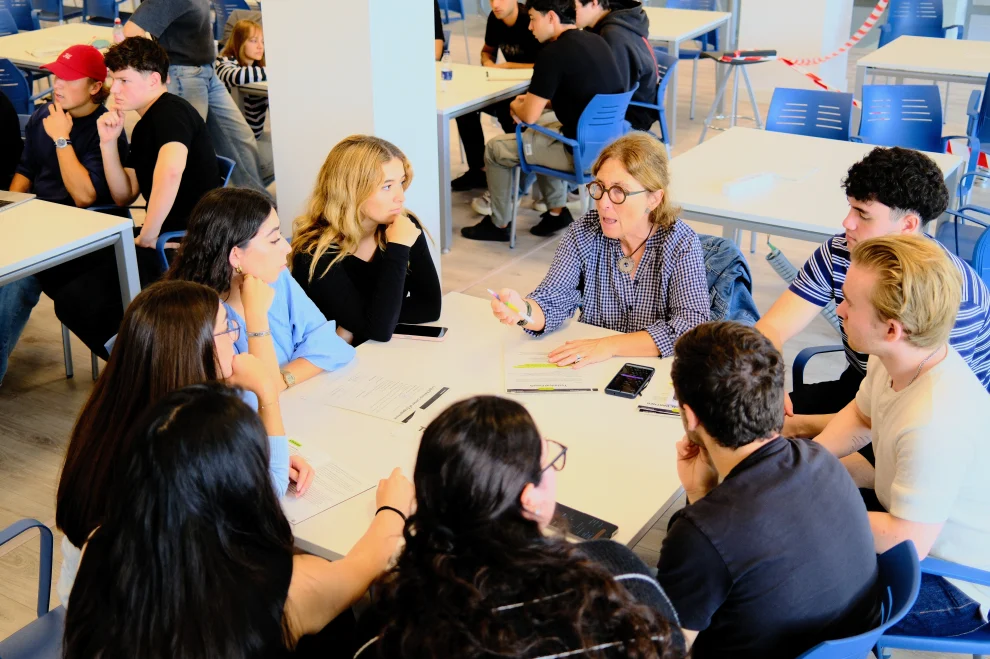
Co-designing solutions for complex, human-centred challenges: it’s a wonderful way to bring research closer to people and society. But setting up and coordinating such a participatory process is quite complicated. How do you reconcile the unpredictability of a co-creative process with, for example, achieving enough publications? 8D helps researchers to integrate a design approach into their research, with an eye for both academic and societal impact.

Data collection through a design process actively engages participants and yields insights that are difficult to achieve through traditional methods, such as a questionnaire.
Collaborate on a form of information transfer that works for the target audience: from card game to VR prototype or video series, and everything in between.
Participatory research ensures that you reach your target groups early on; this increases the likelihood of long-term implementation of the results.
Seeing in advance where publication opportunities lie within a co-creation process is difficult, especially when you work with external partners who speak a slightly different language. Our Connecting Design & Research model links the phases of the Double Diamond to examples of scholarly output. This gives you a shared starting point for an early conversation about publication opportunities.
Curious about concrete examples for each phase? Click on the red dots in the image below for more information and examples from our portfolio. We’d love to hear your questions or suggestions at info@8d.nl.

0 Phase
Application phase
A good project starts before the first sketch. Together with researchers, we turn a societal question into a project plan. We advise on the grant application, the role of design within it, and the partners you need in your consortium.
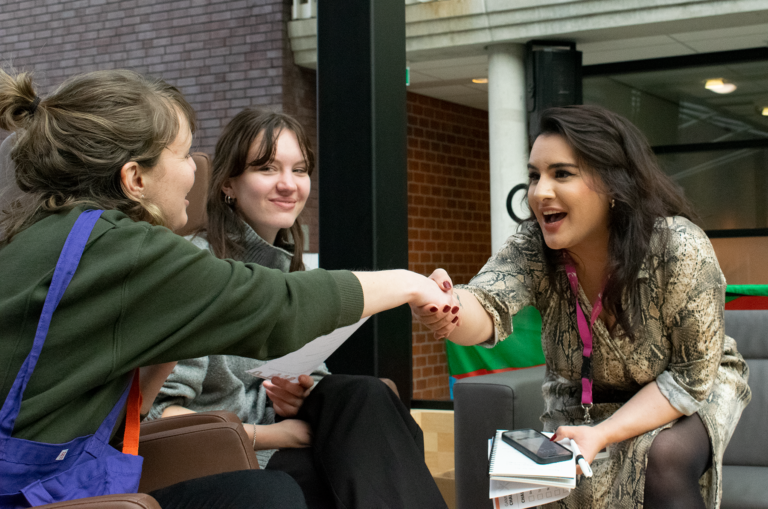
Participation in European consortia increases your impact. Discover our role as a design partner in international collaborations and European programs, where we actively expand our network and initiate new projects.
View topic1 Phase
Exploring and scoping
What is the real problem, and who is it a problem for? Answering this question can often become your first publication. Sometimes researchers tackle this part on their own, and sometimes we contribute from this stage onwards. We often gather valuable input in our “problem storm”: an interactive session where we work with the people affected to define the “design gap”, the difference between the current situation and the one we want.
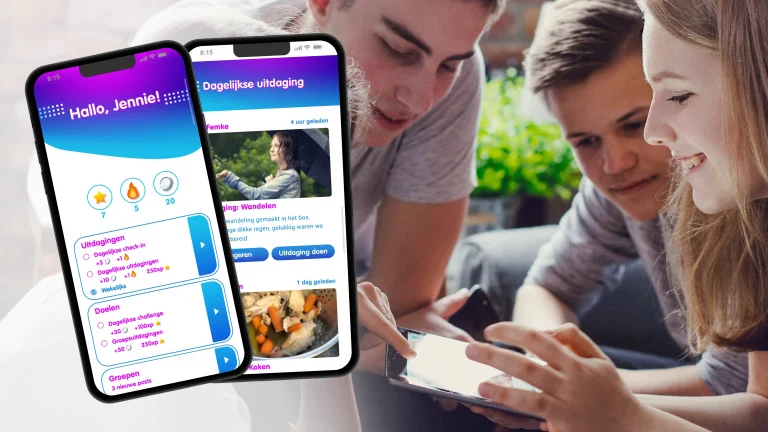
In consultation with young people and care professionals, GGz Centraal and 8D have developed a prototype for the 'Lifestyle Challenge', a serious game that supports young people with psychiatric problems in learning and maintaining a healthy lifestyle. The results from the co-creation process are promising, according to Bianca Braakhuis, Program Manager Lifestyle: 'With lifestyle change you have to work together; you can't impose it from above as a healthcare professional.…
Read blog2 Phase
Better together
Together with end users and stakeholders, we work step by step towards a final design. We start with very simple prototypes and pay close attention to the context in which the solution has to work. The design process itself can also be a subject of research. Think of questions like: “Did co-design change participants’ attitudes towards [x]?”
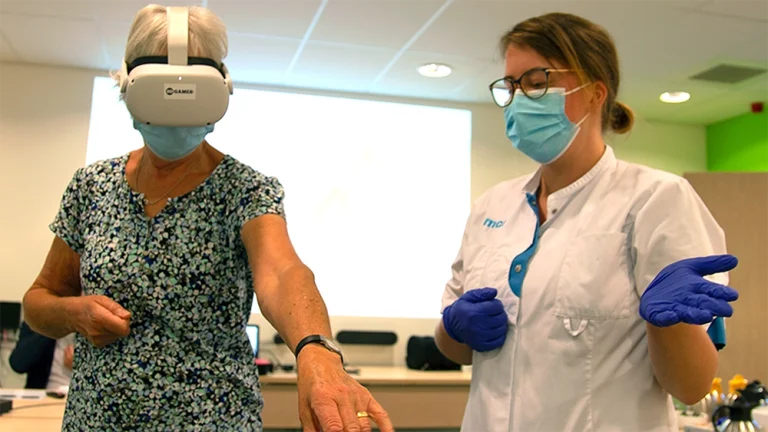
Recovering after an ICU stay requires significant motivation and effort from patients. In collaboration with Dr. Lise Beumeler and the Medical Center Leeuwarden, 8D developed Puzzle Motion — a VR training tool designed to support this process. The game uses infrared sensors to encourage arm and hand movement through playful, interactive puzzles.
View project3 Phase
Iterative development
This phase is about testing and iterating: does it work, is it understood, and does it fit the context? Our support varies, from advice on what data you can collect and how to handle it, to designing and running a complete test protocol. Even if you do much of it yourself, we’re happy to share our knowledge and experience to help you get started.
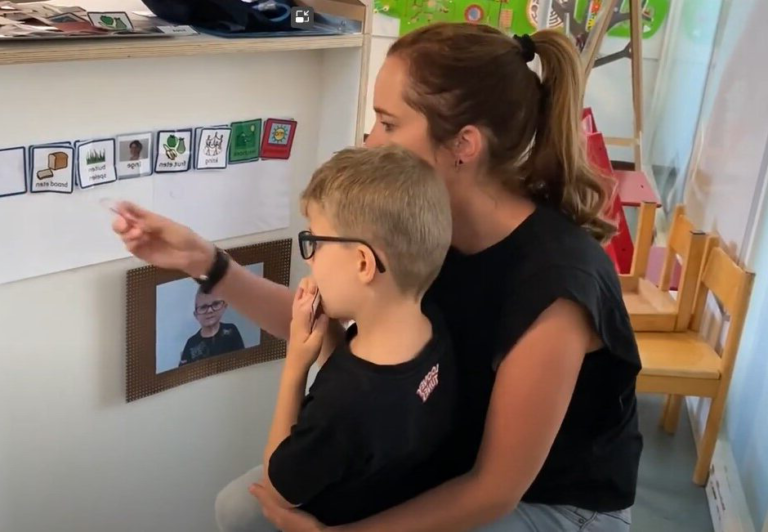
'An important condition we included was scalability; if the prototype proves effective, then it should be feasible and easy for the entire field to start using the tool as well.' Dr. Stijn Deckers |Milo & OOK-OC! Milo, OOK-OC! and 8D are working together on a challenging innovation project: the development of a game that helps remedial educationalists, psychologists and practitioners to map the cognitive skills and abilities of children with…
Read blog4 Phase
Impact measurement
Does the solution achieve what we set out to do? And what would it take to scale it up? Questions like these are often central to the final phase: measuring impact. Like testing, impact can be measured in many ways and through many different lenses. In a co-design process, there are often “soft” outcomes alongside the hard results, such as high levels of target group engagement. We’re happy to help you turn these into measurable results or a compelling narrative.
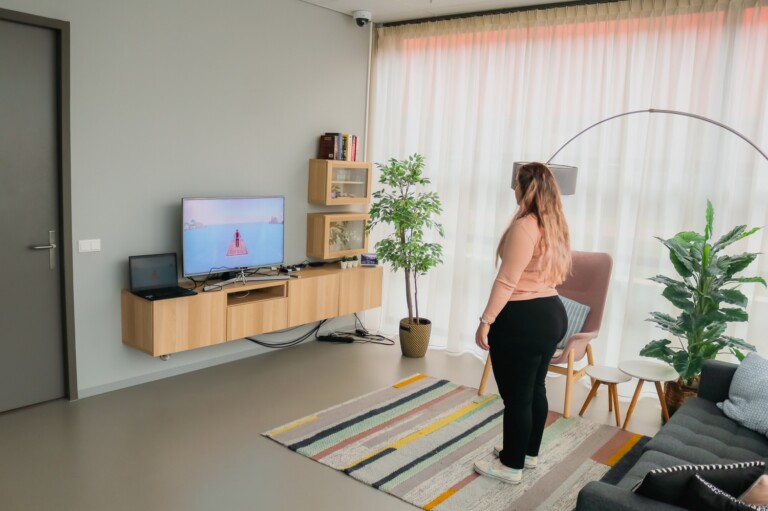
Can playfully imitating movements in a video game help people train their balance? Particularly during recovery from a stroke? Together with researchers at the University of Twente and Radboud University Medical Center, we set out to answer that question. In co-creation, we developed a prototype that researchers and patients can now test together.
View projectWhere possible, we work according to the principles of Open Science. This means that we make our work as open and accessible as possible, both in terms of the process and the results. This allows colleagues, researchers, citizens and organisations to build on what we have learned. It also ensures that alternative outputs from research projects – such as games or co-creation processes – remain visible and transferable. This way of working is in line with our mission to embed design sustainably within the field of research.
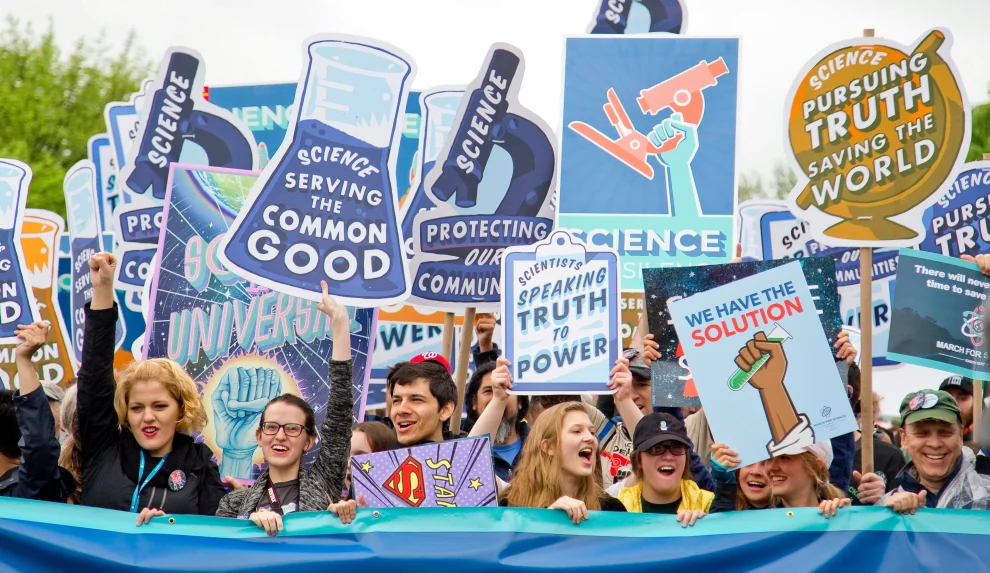
Valuable insights from the research and innovation sector are still far from reaching people and society. Or the implementation of new knowledge or tools remains limited to one organization, while the issue is broader and many more people can benefit from it. Even across national borders.
8D wants to change this. We embed design thinking and participatory approaches in the field of research, not only in the Netherlands but also far beyond. We have been a design partner in more than twenty-five European research consortia, including within the Horizon Europe Programme
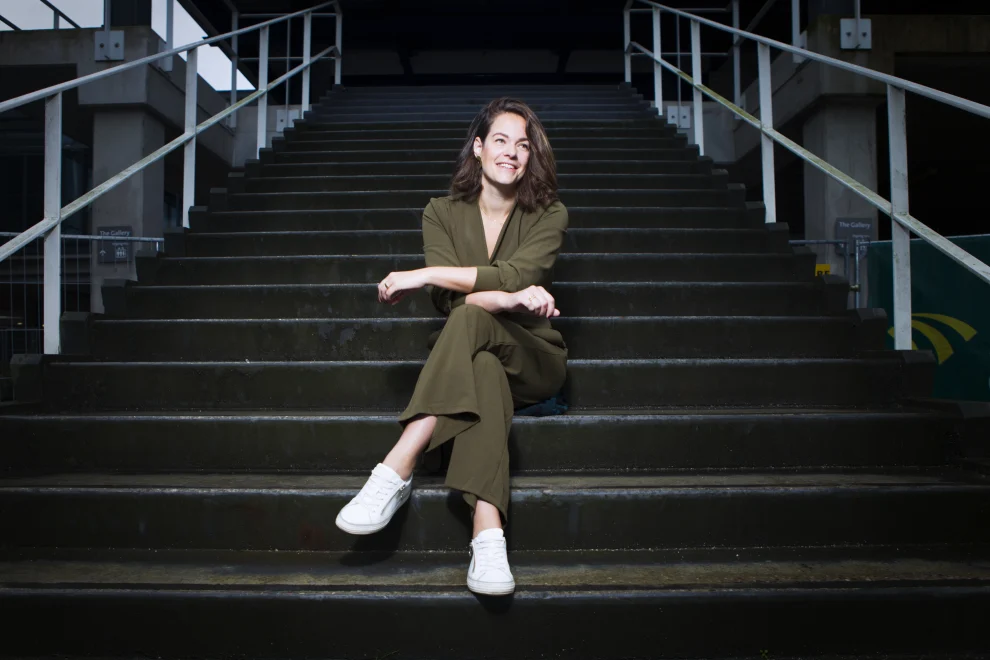
Nienke Beerlage-de Jong is Assistant Professor at the University of Twente and a researcher in the field of infectious diseases and One Health, a field in which human, animal and planetary health are closely linked. She worked with 8D on a serious game about complex decision-making in zoonoses, diseases that can pass from humans to animals.
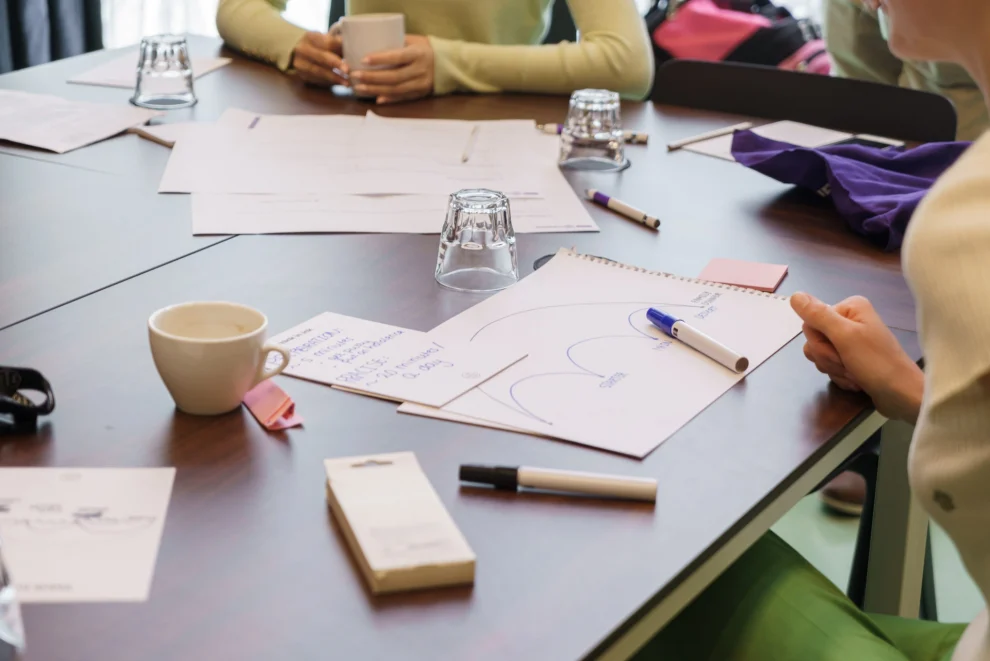
Using a real-life example from our portfolio, in this article we show how co-creation can enhance academic impact and societal relevance. The focus is on our collaboration with researcher and biomedical scientist Lise Beumeler, with whom 8D developed a VR game for recovery after being admitted to the Intensive Care Unit (ICU). This development was part of Beumeler’s PhD program and, through follow-up research with the prototype, has recently led to a new publication.
Transdisciplinary research brings together scientists and societal actors such as designers, artists, and policymakers to tackle complex issues. Examples include ethical dilemmas surrounding technology, climate adaptation, or healthcare innovation. Despite its potential, implementation remains challenging in practice: how do you ensure equal collaboration? How do you bridge differences in working methods and language? We discussed these questions with Julia Hermann, Assistant Professor in Philosophy and Ethics of Technology at the University of Twente.